
Mental Load Checklist: The Invisible Household Tasks
Updated November 17, 2026
Some housework is easy to see: cooking, cleaning, laundry. Other work happens in someone’s head: noticing the soap is running low, remembering the form that’s due Friday, figuring out a birthday gift. This checklist helps you see that work and share it. The research summaries below were checked against the published abstracts on November 17, 2026.
Quick answer
- What it is: The mental load is the planning side of running a home: noticing what’s needed, looking into options, deciding, and following up until it’s done.Read more
- The checklist: Go through the list by area (schedules, school, health, food, home, money, family) and write down who handles each item today.See the checklist
- How to share it: Hand over whole tasks, from noticing to follow-up, and keep plans and lists where everyone can see them.See how to share it
What is the mental load?
“Mental load” is the everyday name for the thinking and planning work behind a household. Sociologist Allison Daminger studied it in “The Cognitive Dimension of Household Labor” (American Sociological Review, 2019). In that study, which draws on 70 in-depth interviews with members of 35 couples, she calls it cognitive labor and describes four parts:
- Anticipating: Noticing that something will be needed.
- Identifying options: Finding ways to meet that need.
- Deciding: Choosing one of the options.
- Monitoring: Checking that it actually got done.
Daminger writes that this work is taxing but often invisible, both to the person doing it and to their partner, which makes it a frequent source of conflict for couples. In her study, women did more of this work overall, especially anticipating and monitoring. Deciding was shared roughly equally.
A 2019 study in Sex Roles by Lucia Ciciolla and Suniya Luthar surveyed 393 U.S. mothers with partners, mostly from upper-middle-class backgrounds. Most said they alone handled organizing the family’s schedules and keeping order in the home, while household finances were largely shared. Feeling responsible for a larger share of household management was linked with lower well-being and lower satisfaction with the relationship.
This guide doesn’t say what the right split is for your home. The point of the checklist is to make the work visible so you can talk about it.
The mental load checklist
Print this page or copy the list. Next to each item, write who handles it now. Each person can fill it in on their own first, then compare. Skip what doesn’t apply to your home.
Calendar and schedules
- Keeping the family calendar up to date
- Tracking school breaks, early pickups, and days off
- Booking appointments: doctor, dentist, vet, haircuts
- Arranging childcare, including a backup plan
- Planning trips and making the packing list
- Replying to invitations
School and kids’ activities
- Reading school emails, apps, and notices
- Signing forms and permission slips by the deadline
- Signing up for activities and camps
- Noticing when clothes and shoes no longer fit
- Buying school supplies and items for special days
- Setting up rides and playdates
Health
- Scheduling checkups and follow-up visits
- Refilling prescriptions before they run out
- Keeping insurance cards and health records handy
- Restocking the first aid kit and medicine cabinet
Food and supplies
- Deciding what to cook this week
- Noticing what’s running low and adding it to the list
- Keeping the grocery list up to date
- Restocking toiletries, cleaning supplies, and paper goods
- Packing lunches and snacks
Home
- Remembering trash and recycling pickup day
- Noticing repairs and calling someone to fix them
- Keeping track of seasonal jobs, like swapping clothes or cleaning gutters
- Testing smoke alarms and replacing batteries
- Returning packages, library books, and borrowed things
Money and paperwork
- Paying bills on time
- Renewing licenses, registrations, and passports
- Keeping track of subscriptions
- Gathering tax documents
- Filing important papers where you can find them
Family and friends
- Remembering birthdays and anniversaries
- Choosing, buying, and wrapping gifts
- Sending cards and thank-you notes
- Keeping in touch with relatives
- Planning holidays and get-togethers
- Caring for pets: food, vet visits, and sitters when you travel
Keep plans and to-dos in a shared app
A lot of the mental load is remembering things for other people. Putting dates, to-dos, and lists in one place the whole family can open moves that memory out of one person’s head. Here are the steps in ienon.
How to share plans and to-dos in ienon
- 1Bring everyone into the same Home. The first person opens the top-left menu in “Home”, taps “Invite”, then taps “Copy Invite Link” and sends the link. An invitation link or QR code can invite up to 5 people and is valid for 7 days.
- 2Add the event: tap + in “Calendar”, enter the title, start and end times, and assignees, then tap “Save”. Leave “Add to personal schedule” unchecked so the Home can see it.
- 3Add the preparation as a to-do: open “Todo”, tap +, and choose the “Assignee” and the “Due” date. Split several items into “Subtask”, then tap “Add”.
- 4Check items off when they’re ready, and revisit the shared event if plans change.
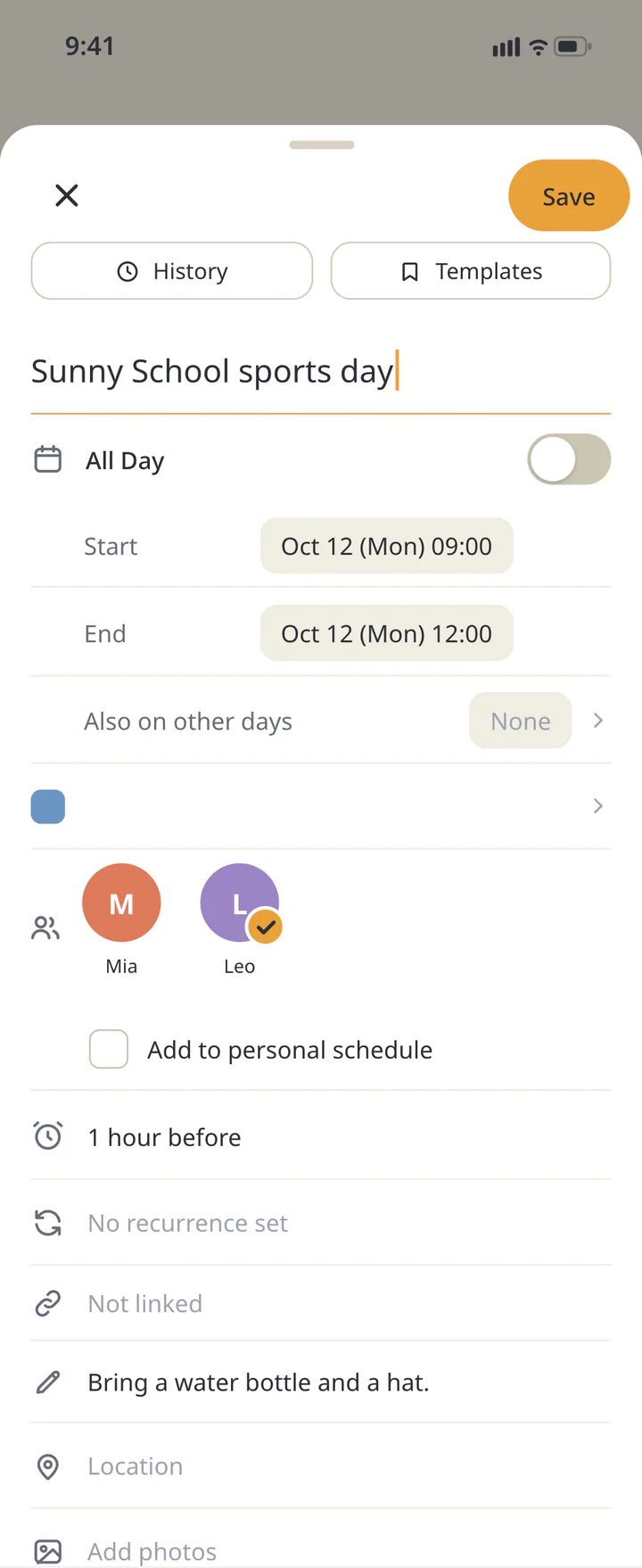 Add the event and pickup assignee
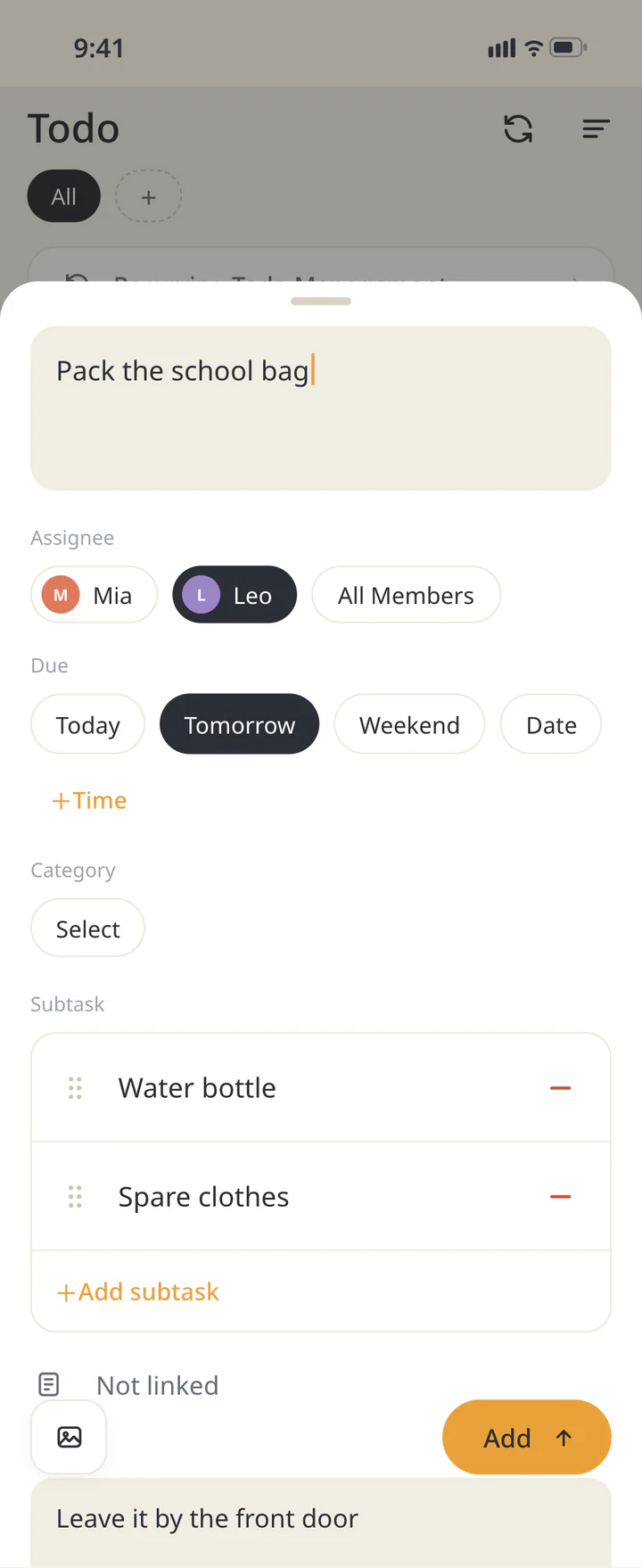 Create a packing to-do with a deadline
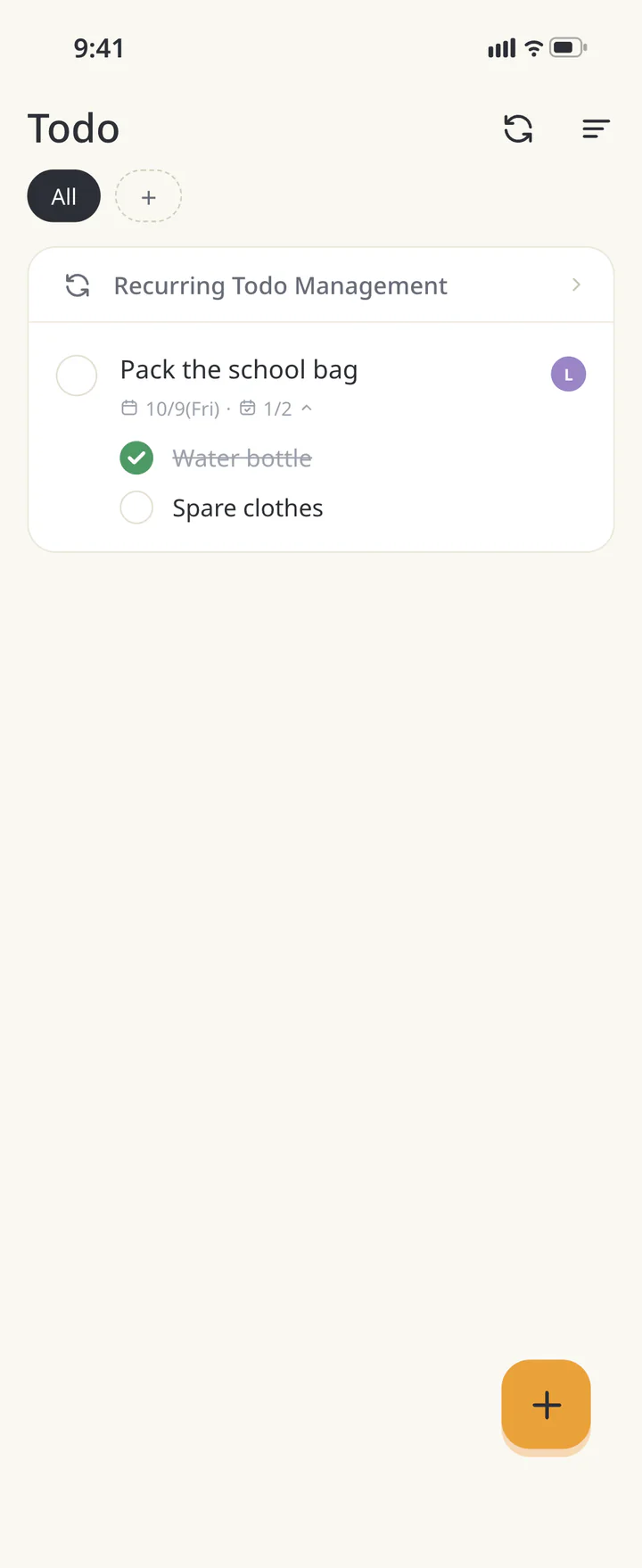 Check off completed preparation


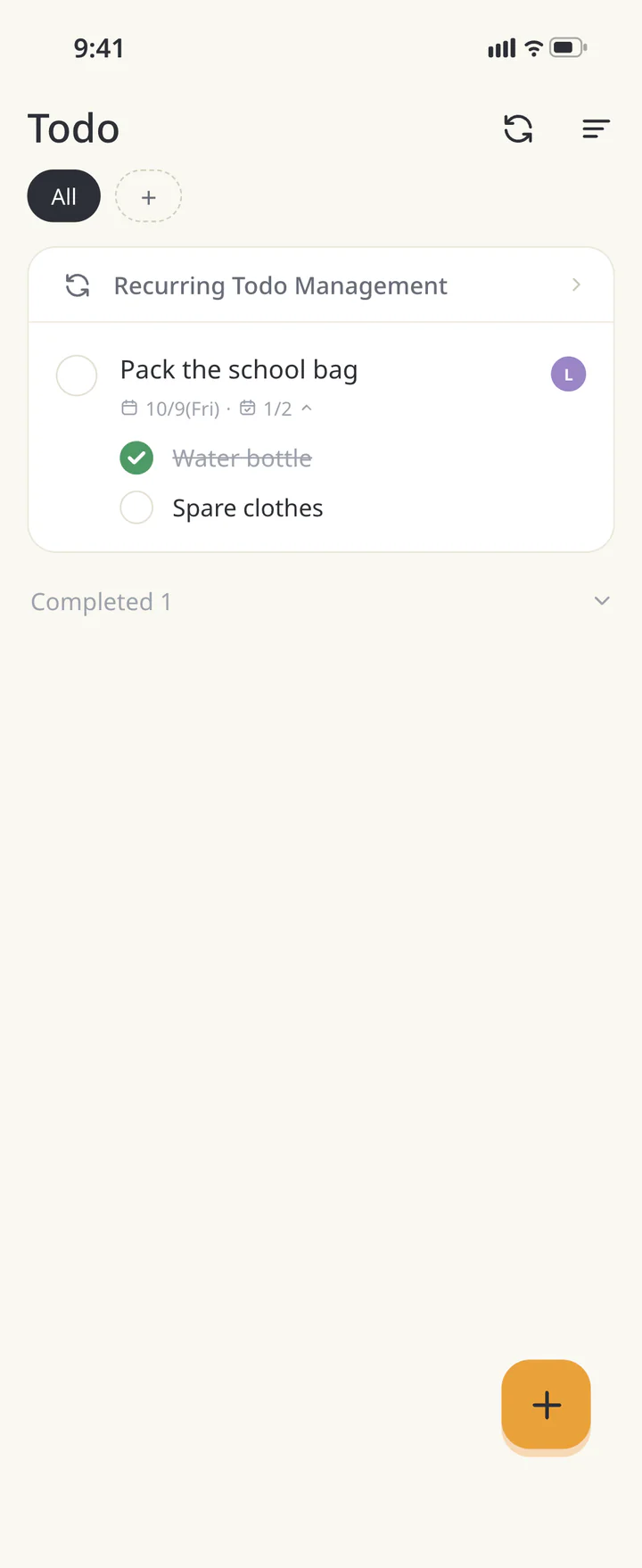

Things to know in ienon
- Everyone installs it: Each person installs ienon and signs in with their own Apple or Google account. The Apple option appears on supported devices. You don’t need to share login details.Invite someone to your Home
- Events and assignees: Home members can see shared events. Assignees and visibility are separate settings.Keep your plans in one shared calendar
- Due dates and alerts: A due date and a notification are separate. Check the app’s notification settings and your phone’s permission.Set due dates, recurring tasks, and chores
- School notices: In this workflow, the person reading the notice enters the event and the preparation. Keep the notice handy to check dates and items.
Frequently asked questions
QWhat is the mental load?
It’s the thinking and planning work of running a home: noticing what’s needed, looking into options, deciding, and following up. Sociologist Allison Daminger calls this cognitive labor and found that it is often invisible, both to the person doing it and to their partner.
QIs the mental load the same as housework?
It’s part of it. Physical chores like cooking and cleaning are easy to see. The mental load is the planning around them, such as noticing you’re out of detergent and making sure someone buys it.
QHow do I start the conversation with my partner?
Try filling in the checklist on your own, then comparing. Talking about specific items, like who tracks school forms, is often easier than talking about the load in general.
QDoes the mental load apply if we don’t have kids?
Yes. Couples without kids and roommates also share planning work, such as bills, groceries, repairs, and family birthdays. Skip the school items and use the rest of the list.
QCan I print the checklist?
Yes. Use your browser’s print option to print this page, then write a name next to each item.
Sources
- Allison Daminger, “The Cognitive Dimension of Household Labor.” American Sociological Review 84, no. 4 (2019): 609–633. Abstract accessed November 17, 2026.doi.org/10.1177/0003122419859007
- Lucia Ciciolla and Suniya S. Luthar, “Invisible Household Labor and Ramifications for Adjustment: Mothers as Captains of Households.” Sex Roles 81, no. 7–8 (2019): 467–486. Abstract accessed November 17, 2026.doi.org/10.1007/s11199-018-1001-x
Put the family’s plans where everyone can see them
With ienon, everyone in the same Home shares the calendar, grocery list, and chores in one app. ienon is free to start.